
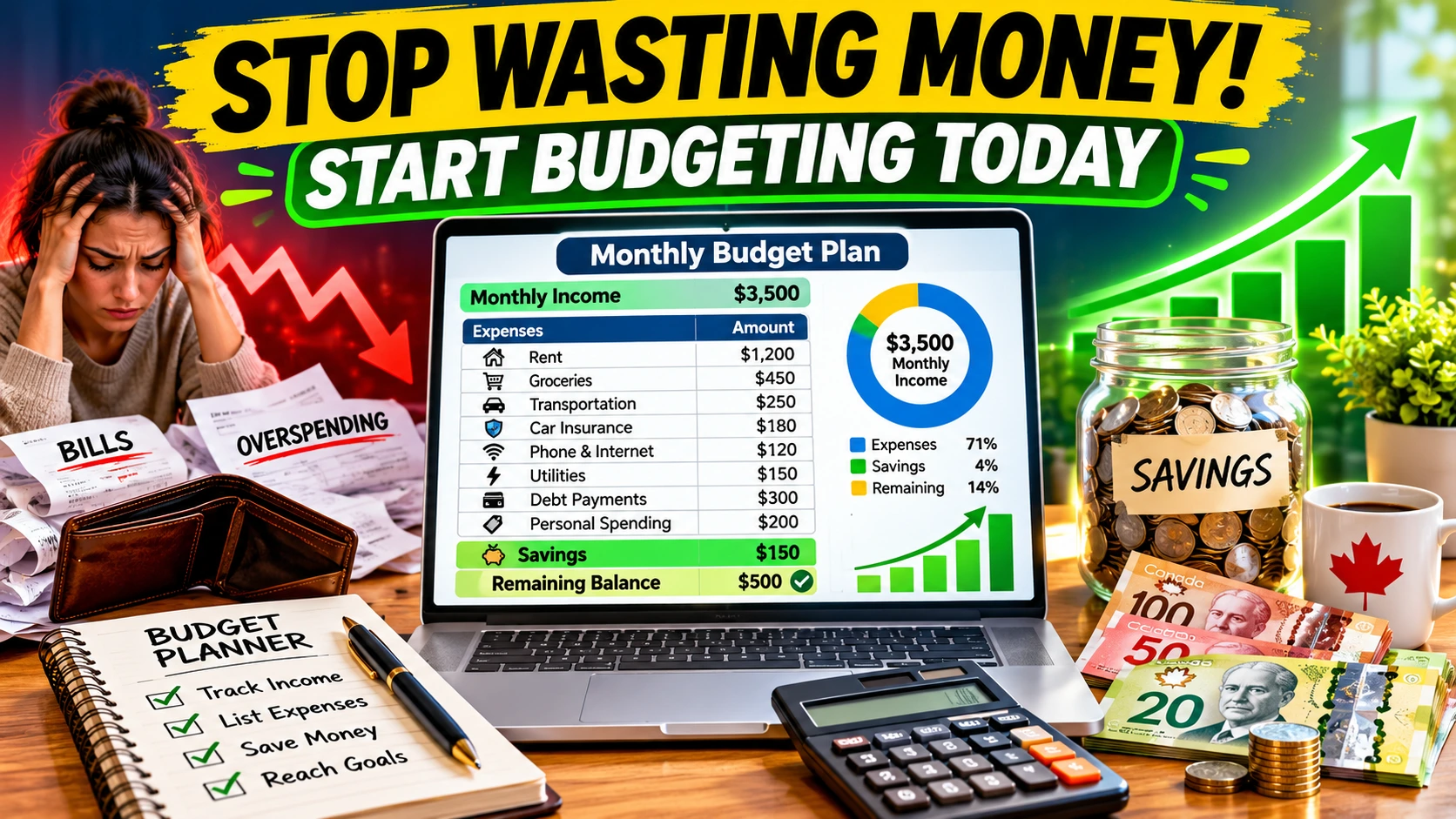
Budget planning is one of the most useful habits you can develop for your financial well-being. It gives you a clear picture of your income and expenses so you can make better decisions before spending your money.
Without a budget, you might reach the end of the month wondering where your paycheque went. Small purchases, online shopping, restaurant meals, and unexpected expenses can quickly add up.
A beginner-friendly budget helps you avoid this situation by giving every dollar a purpose. How to make a budget
Here are some important reasons to start budgeting:
1. Understand Where Your Money Goes
One of the biggest benefits of budgeting is understanding your spending habits.
For example, you might realize that you are spending more money on takeout, subscriptions, or shopping than you originally thought. Once you identify these expenses, you can decide where to make adjustments.
2. Pay Your Monthly Bills on Time
A budget helps you prepare for important monthly payments, including:
Rent or mortgage payments
Electricity and water bills
Internet and mobile phone bills
Car payments and insurance
Credit card payments
Grocery and transportation costs
Planning these payments in advance can help you avoid late fees and unnecessary financial pressure.
3. Build Better Savings Habits
Saving money becomes easier when you include it in your monthly budget.
Even if you can only save $20 or $50 per month, starting small is better than waiting until you have extra money.
Over time, these regular contributions can help you build an emergency fund and prepare for future expenses.
4. Reduce Financial Stress
Money worries often happen when you are unsure whether you can afford your expenses.
A clear budget helps you understand your financial position. You can see what you can afford, what needs attention, and where you may need to reduce spending.
Beginner Budget Planning: Step-by-Step Guide
Creating your first budget does not require complicated calculations. You can start with a notebook, a spreadsheet, or a simple budgeting tool.

Follow these steps to build a monthly budget that works for your lifestyle.
Step 1: Calculate Your Monthly Income
The first step in beginner budget planning is understanding how much money you receive every month.
Your income may come from different sources, such as:
Full-time or part-time employment
Self-employment or freelance work
Business income
Side jobs
Other regular income sources
If you receive a salary, use your take-home pay rather than your gross salary. Take-home pay is the amount you actually receive after deductions such as income tax, CPP, and EI.
For example, if your monthly take-home pay is $3,500, that is the amount you should use when creating your budget.
If your income changes every month, calculate an average based on your recent earnings. You may also prefer to build your budget around a lower, realistic income estimate.
This approach can help you avoid spending money you may not receive.
Step 2: List All Your Monthly Expenses
After calculating your income, write down everything you spend money on.
Start with essential expenses because these are usually the most important payments.
Common monthly expenses include:
Housing or rent
Groceries
Transportation
Car insurance
Gas and public transit
Phone and internet
Utilities
Loan and credit card payments
Childcare and other family expenses
Do not forget smaller expenses. Coffee, snacks, streaming subscriptions, and occasional online purchases may seem inexpensive individually, but they can become a significant part of your monthly spending.
Review your recent bank and credit card statements to get a realistic picture of your expenses.
The 50/30/20 Budget Rule

The 50/30/20 rule is one of the easiest budgeting methods to understand.
It divides your after-tax income into three categories:
- 50% for needs: Housing, groceries, utilities, transportation, and essential bills.
- 30% for wants: Entertainment, shopping, restaurants, and hobbies.
- 20% for savings and debt repayment: Emergency savings, investments, and additional debt payments.
For example, if your monthly take-home income is $3,500:
Category | Percentage | Amount |
Needs | 50% | $1,750 |
Wants | 30% | $1,050 |
Savings and debt repayment | 20% | $700 |
Total | 100% | $3,500 |
This method provides a useful starting point, but you do not have to follow the percentages exactly.
If your rent and essential expenses are high, you may need to adjust the percentages to match your situation.
Zero-Based Budgeting
Zero-based budgeting means assigning a purpose to every dollar of your monthly income.
Your income minus your planned expenses, savings, and debt payments should equal zero.
For example:
- Monthly income: $3,500
- Total planned expenses: $2,900
- Savings: $300
- Additional debt repayment: $300
Remaining unallocated money: $0.
This does not mean you must spend all your money. Savings and debt payments are included in your budget, so every dollar has a specific job.
This method is particularly helpful if you want to understand exactly where your money is going.
The Pay-Yourself-First Budget Method
This method focuses on saving money before spending on non-essential purchases.
As soon as you receive your paycheque, transfer a planned amount into your savings account.
For example, if you receive $1,750 every two weeks, you might transfer $75 into savings from each paycheque.
This creates a consistent savings habit without requiring you to calculate every small purchase.
Easy Beginner Budget Planning Tips to Manage Money Better
Creating a budget is only the first step. Following it consistently is what makes the biggest difference.
Here are some practical tips to help you stay on track.
Track Your Spending Regularly
Make it a habit to check your bank transactions and record your expenses.
You can use a notebook, spreadsheet, or budgeting app. Choose something simple that you will actually use.
You do not need to track every detail perfectly. Start by monitoring your biggest spending categories.
Avoid Unnecessary Monthly Subscriptions
Review your subscriptions and memberships.
You might be paying for streaming services, apps, or memberships that you rarely use.
Canceling even one or two unused subscriptions can free up money for savings or important bills.
Plan Your Grocery Shopping
Grocery shopping is an area where small changes can make a difference.
Try these simple habits:
- Prepare a shopping list before visiting the store.
- Compare prices between different stores.
- Look for weekly discounts and promotions.
- Avoid shopping when you are hungry.
- Plan meals before buying groceries.
- Reduce food waste by using what you already have.
These steps can help you control your grocery spending without compromising your basic needs.
Build an Emergency Fund

Unexpected expenses can happen at any time. Your car may need repairs, you may face an unexpected bill, or your income may temporarily decrease.
An emergency fund provides money for these situations.
Start with a small goal, such as $500 or $1,000. Once you reach that amount, work toward saving three to six months of essential living expenses if your financial situation allows.
Keep emergency savings somewhere accessible and separate from your everyday spending money.
Review Your Budget Every Month
Your financial situation may change over time.
You might receive a pay increase, move to a different home, change jobs, or have new family expenses.
Review your budget at the end of each month and make adjustments when necessary.
Budgeting is an ongoing process, not something you create once and forget.
Common Beginner Budget Planning Mistakes to Avoid
Many people struggle with budgeting because they make their plans too complicated or unrealistic.
Understanding these common mistakes can help you avoid frustration.
Creating an Unrealistic Budget
If you normally spend $500 on groceries but suddenly set a budget of $200, you may find it difficult to follow.
Start with your actual spending habits and make gradual improvements.
Forgetting Occasional Expenses
Some expenses do not happen every month, but they still need to be included in your financial plan.
Examples include:
- Vehicle maintenance
- Annual insurance payments
- Holiday shopping
- Birthday gifts
- School expenses
- Medical and dental costs
Estimate these costs and set aside a small amount every month.
Ignoring Small Purchases
Small purchases can have a bigger impact than you expect.
For example, spending $8 every day on coffee and snacks adds up to approximately $240 per month.
You do not need to eliminate every small purchase. Simply become more aware of how often you spend.
Giving Up After One Bad Month
Your first budget may not work perfectly.
You might spend more than planned in one category or forget an expense.
That is completely normal.
Instead of giving up, review what happened and adjust your next month’s budget.
Consistency is more important than perfection.
Beginner Budget Planning Tools That Can Make Things Easier
You do not need expensive software to manage your money. Several simple tools can help you organize your income and expenses.
Here are a few options:
- Microsoft Excel or Google Sheets: Useful for creating a monthly budget, tracking expenses, and monitoring savings.
- A budgeting notebook: A good choice if you prefer writing down your income and expenses manually.
- Budgeting apps: Some apps allow you to categorize transactions, monitor spending, and review your financial habits.
- Money Flow Funds Budget Calculator: You can also use our free Budget Calculator to organize your income and expenses more easily.
Choose a tool that matches your needs. A simple spreadsheet that you update regularly is often better than a complicated budgeting system that you stop using after a few days.
Frequently Asked Questions About Beginner Budget Planning
Q1. How Do I Start Budget Planning as a Beginner?
Start by calculating your monthly take-home income. Then list your essential expenses, debt payments, savings goals, and personal spending. Subtract your planned expenses from your income to understand how much money remains.
Q2. How Much Money Should I Save Every Month?
There is no fixed amount that everyone must save. A common starting target is 20% of your take-home income, but you can begin with a smaller amount if your expenses are high. The most important thing is to develop a regular savings habit.
Q3. What Is the Easiest Budgeting Method for Beginners?
The 50/30/20 budgeting rule is a good starting point because it divides your income into needs, wants, and savings. However, zero-based budgeting is another useful option if you prefer to plan every dollar.
Q4. How Often Should I Update My Monthly Budget?
Review your budget at least once a month. You should also check your spending during the month to make sure you are staying within your planned limits. Update your budget whenever your income or expenses change.
Q5. Can I Create a Budget With a Low Income?
Yes. Budgeting is useful regardless of how much money you earn. Start by prioritizing housing, groceries, transportation, utilities, and minimum debt payments. Then identify any expenses you can reduce and save whatever amount is realistically affordable.
Q6. Should I Pay Off Debt or Save Money First?
If you have debt, continue making at least the required minimum payments. It is also helpful to build a small emergency fund so unexpected expenses do not force you to borrow more money. After that, consider directing additional money toward high-interest debt while gradually building your savings. If you need help managing your debt, explore these strategies for paying off debt from the Government of Canada.
Conclusion: Start Your Beginner Budget Planning Journey Today
Managing money does not have to be complicated. You do not need a perfect financial plan or a large income to start making better financial decisions.
The most important thing is to understand your income, organize your expenses, set realistic savings goals, and review your progress regularly.
Remember, your first budget is simply a starting point. You can improve it as you learn more about your spending habits and financial needs.
Start small, stay consistent, and celebrate your progress along the way.
If you are ready to organize your finances, try our free Budget Calculator and take the first step toward better money management.